Question 1 of 25 · Vehicle Dynamics
What is "crack-the-whip"?
-
A.
A driver discipline rule
-
B.
When the rear trailer swings out due to sudden steering inputs
-
C.
A type of weight distribution
-
D.
A coupling procedure
Correct answer: B.
The rear trailer can swing far wider than the tractor, magnifying steering inputs.
Question 2 of 25 · Adverse Conditions
What's the safe way to handle a doubles or triples on a wet road?
-
A.
Reduce speed and increase following distance
-
B.
Drive at posted speed
-
C.
Use chains
-
D.
Both A and C
Correct answer: A.
Slower speeds and more space are essential on wet roads.
Question 3 of 25 · Coupling
What's a common mistake when coupling doubles?
-
A.
Not properly aligning the dolly with the second trailer
-
B.
Forgetting to connect air lines
-
C.
Not testing the brakes
-
D.
All of the above
Correct answer: D.
Alignment, air lines, and brake tests are common areas for mistakes.
Question 4 of 25 · Lane Changes
What's the major risk when changing lanes with doubles or triples?
-
A.
The rear trailer may not follow exactly
-
B.
Other vehicles may not see the long combination
-
C.
The trailer may swing out
-
D.
All of the above
Correct answer: D.
Visibility and rear-trailer tracking are both major lane-change risks.
Question 5 of 25 · Backing
When backing doubles or triples, you should:
-
A.
Avoid backing if possible
-
B.
Use a helper as a spotter
-
C.
Back slowly and carefully
-
D.
All of the above
Correct answer: D.
Avoid backing combinations; use a spotter and go slowly when you must.
Question 6 of 25 · Coupling
What's a "spider" or "dolly converter"?
-
A.
A type of trailer
-
B.
A coupling device with a fifth wheel mounted on a single axle
-
C.
A type of brake
-
D.
A safety chain
Correct answer: B.
Converter dollies have a fifth wheel and an axle to allow connecting trailers.
Question 7 of 25 · Skids
What should you do if a trailer starts to skid?
-
A.
Release the brakes to allow trailer wheels to roll
-
B.
Apply more brake
-
C.
Steer hard right
-
D.
Accelerate
Correct answer: A.
Release brakes to let trailer wheels roll; steer to recover.
Question 8 of 25 · Adverse Conditions
What's the safest way to handle wind with doubles or triples?
-
A.
Slow down and grip the wheel firmly
-
B.
Speed up to clear the area
-
C.
Use engine retarder
-
D.
Lock the brakes
Correct answer: A.
Reduce speed and steer firmly. Wind affects long combinations more than singles.
Question 9 of 25 · Coupling
What's the role of safety chains on a converter dolly?
-
A.
To support the dolly when uncoupled
-
B.
To prevent the trailer from coming loose if the pintle hook fails
-
C.
To improve traction
-
D.
To act as a brake
Correct answer: B.
Safety chains keep the trailer attached if the pintle hook fails.
Question 10 of 25 · Inspection
Why is it important to inspect each trailer separately?
-
A.
Each trailer has its own systems and potential issues
-
B.
It's easier to spot problems
-
C.
It's required by law
-
D.
All of the above
Correct answer: D.
Each trailer needs its own inspection of brakes, lights, and condition.
Question 11 of 25 · CDL Rules
Why are doubles and triples drivers required to have additional training?
-
A.
They handle differently and require more skill
-
B.
Federal regulations require training
-
C.
They have higher rollover risk
-
D.
All of the above
Correct answer: D.
Skill, regulation, and rollover risk all justify extra training.
Question 12 of 25 · Mountain Driving
What's the recommended speed when descending a steep grade with doubles?
-
A.
Slow speed using lower gears and engine braking
-
B.
Posted speed limit
-
C.
Faster than single trailers
-
D.
Use service brakes only
Correct answer: A.
Use lower gears and engine braking. Service brakes only intermittently.
Question 13 of 25 · Vehicle Dynamics
Doubles and triples have ____ rollover risk than single trailers.
-
A.
Lower
-
B.
Higher
-
C.
The same
-
D.
No rollover risk
Correct answer: B.
Multiple trailers have higher rollover risk because of greater articulation and "crack-the-whip" effect.
Question 14 of 25 · Cargo
Doubles and triples are most stable when:
-
A.
All trailers are properly loaded
-
B.
Trailers are empty
-
C.
The lead trailer is empty
-
D.
The rear trailer is heaviest
Correct answer: A.
Proper loading on every trailer is key to stability.
Question 15 of 25 · Vehicle Dynamics
How do you reduce off-tracking in doubles?
-
A.
Make wider turns
-
B.
Slow down
-
C.
Use mirrors carefully
-
D.
All of the above
Correct answer: D.
Wider turns, slower speed, and careful mirror use minimize off-tracking impact.
Question 16 of 25 · Coupling
What is the pintle hook?
-
A.
A coupling device on the dolly that connects to the lead trailer's pintle plate
-
B.
A type of tire
-
C.
A safety chain
-
D.
A brake component
Correct answer: A.
The pintle hook on the dolly connects to the lead trailer for towing.
Question 17 of 25 · Cargo
What's the consequence of bad weight distribution in doubles?
-
A.
Increased rollover risk
-
B.
Poor handling
-
C.
Tire wear
-
D.
All of the above
Correct answer: D.
Bad distribution increases rollover, handling problems, and tire wear.
Question 18 of 25 · Coupling
Where should the heaviest trailer go in a doubles or triples set?
-
A.
First (closest to the tractor)
-
B.
Last (farthest from the tractor)
-
C.
Anywhere
-
D.
In the middle
Correct answer: A.
Place the heaviest trailer behind the tractor for best stability.
Question 19 of 25 · Speed Management
What's the safe speed for taking corners with doubles or triples?
-
A.
Posted speed limit
-
B.
Slower than single trailers
-
C.
Higher than single trailers
-
D.
No different from single trailers
Correct answer: B.
Take corners more slowly than single trailers due to greater rollover risk.
Question 20 of 25 · Inspection
What's the impact of poor maintenance on doubles or triples?
-
A.
Increased risk of breakdowns and accidents
-
B.
Poor fuel efficiency
-
C.
Legal issues
-
D.
All of the above
Correct answer: D.
Poor maintenance leads to safety, efficiency, and legal problems.
Question 21 of 25 · Communication
How can drivers communicate effectively when driving doubles?
-
A.
Use turn signals well in advance
-
B.
Use mirrors continuously
-
C.
Use the horn when needed
-
D.
All of the above
Correct answer: D.
Clear, early signals, mirrors, and horn use all improve safety.
Question 22 of 25 · Combination Air
What's the role of glad hands in doubles and triples?
-
A.
They connect air lines between each unit
-
B.
They are coupling devices
-
C.
They are safety chains
-
D.
They are landing gear
Correct answer: A.
Glad hands connect service and emergency air lines between every unit.
Question 23 of 25 · Cargo
What's the impact of overloading a trailer in a doubles set?
-
A.
Increased rollover risk
-
B.
Poor handling
-
C.
Brake problems
-
D.
All of the above
Correct answer: D.
Overloading creates a chain of safety problems for the whole combination.
Question 24 of 25 · Coupling
How should you uncouple a converter dolly?
-
A.
Lower the dolly support, disconnect, and pull the tractor and first trailer away
-
B.
Disconnect and drive away
-
C.
Use the trailer parking brake
-
D.
Cut the air lines
Correct answer: A.
Lower support, disconnect lines and pin, then pull the lead unit away.
Question 25 of 25 · Coupling
How do you prevent a trailer from rolling away when uncoupled?
-
A.
Apply trailer brakes and chock the wheels
-
B.
Use the parking brake on the tractor
-
C.
Lower the landing gear quickly
-
D.
Drive away quickly
Correct answer: A.
Set trailer brakes and chock wheels to prevent any roll while uncoupling.
About the Doubles and Triples Test
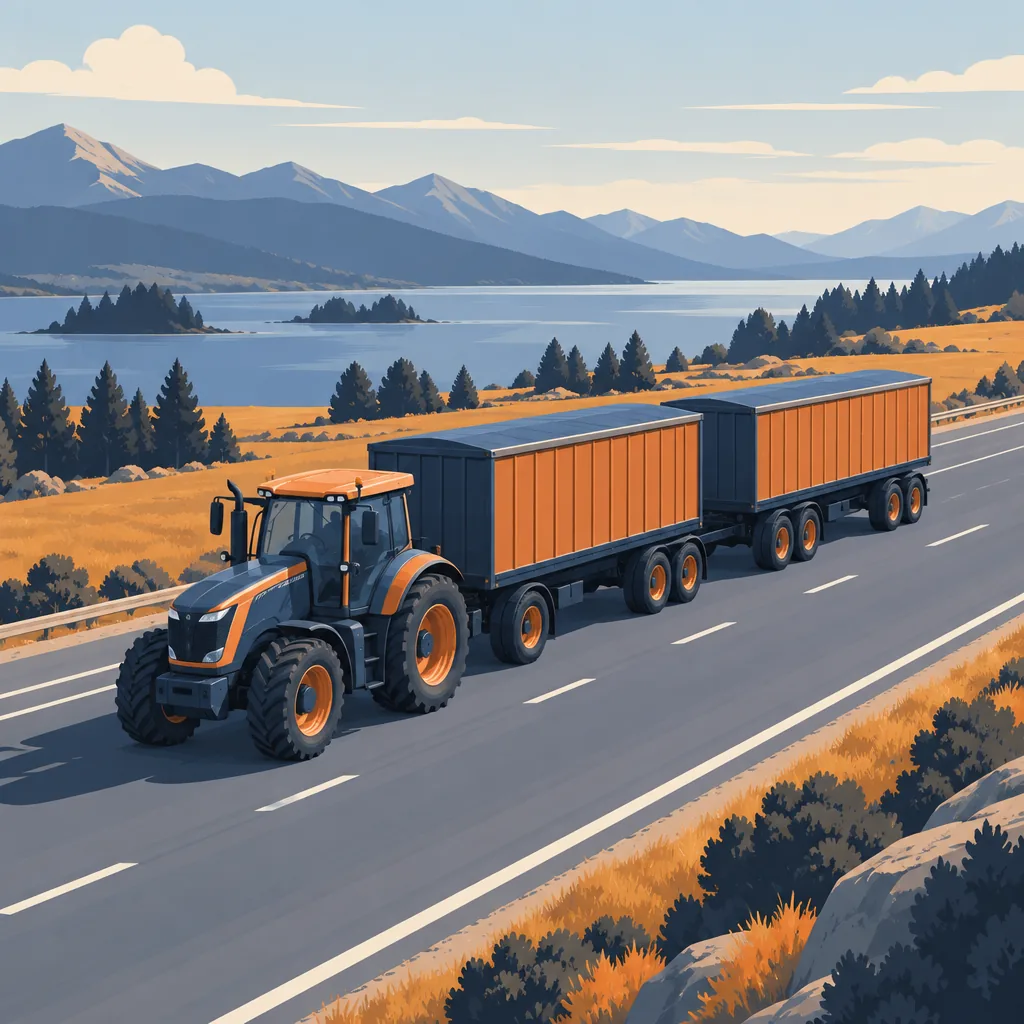
The Doubles and Triples test covers pulling double and triple trailers, coupling and uncoupling, inspecting doubles and triples, antilock brake systems, and safe driving with multiple trailers. Doubles and triples are more likely to roll over than single trailers and are extremely sensitive to steering inputs at the rear trailer.
The Mississippi Department of Public Safety — Driver Services administers this knowledge test as part of its commercial driver license program. To earn the Doubles/Triples (T) on your Mississippi CDL, you need to score at least 16 out of 20 on the official version.
Topics covered on this practice test
- Coupling: 7 questions
- Vehicle Dynamics: 3 questions
- Cargo: 3 questions
- Adverse Conditions: 2 questions
- Inspection: 2 questions
- Lane Changes: 1 question
- Backing: 1 question
- Skids: 1 question
- CDL Rules: 1 question
- Mountain Driving: 1 question
- Speed Management: 1 question
- Communication: 1 question
- Combination Air: 1 question
How to use this practice test
- Read each question carefully. CDL questions are written precisely — small wording differences matter.
- Click an answer choice to check it instantly — right or wrong, you'll see the explanation right away.
- Read the explanation for every question, even ones you got right. The reasoning is more important than the answer.
- Repeat the test until you score 100%. The questions are deterministic per state, so you can track your improvement over multiple sessions.
- Move on to the other endorsement tests for Mississippi until you're ready for the official exam.
Tips specific to the Doubles and Triples test
Doubles and Triples questions emphasize the "crack-the-whip" effect, converter dolly inspection and use, pintle hooks, safety chains, the heaviest-trailer-first loading rule, and the higher rollover risk of multi-trailer combinations. Many states prohibit triples; check local rules.